Source Automatic Tiltable Induction Kettle for Beverage, Sauce, and Jam
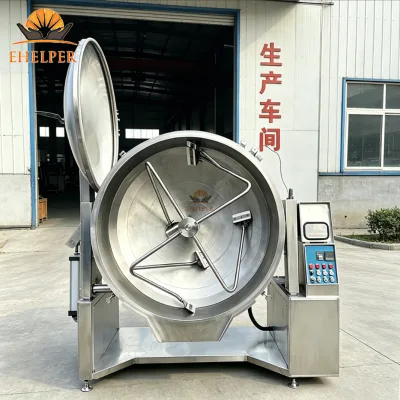
Compare 30 industrial automatic tiltable induction kettle options from verified Chinese manufacturers. These units feature adjustable speeds, controllable temperatures, and planetary stirring for efficient beverage, sauce, and jam production; compare the available evidence and request quotations based on your requirements.
Key considerations
Products List




Comprehensive Sourcing Guide
Automatic Tiltable Induction Kettle Sourcing Guide
Procurement of automatic tiltable induction kettles requires distinguishing between planetary stirring mixers and jacketed pressure cookers, as both offer tilting capabilities but serve distinct culinary functions. The observed market data indicates a wide volume range from 50L to 1000L, with specific models supporting capacities up to 1500L for high-volume industrial operations. Buyers must verify whether the unit is designed primarily for stirring and mixing applications or for high-pressure boiling and stewing, as the internal mechanisms and safety protocols differ significantly between these two categories.
Commercial listings reveal a price spectrum ranging from $4.50 to $29,600, reflecting the variance in material quality, automation levels, and heating methods. While some units feature fully automatic PLC systems and hydraulic tilting, others operate with manual or electric tilting modes and basic mechanical controls. Sourcing teams should align their budget with the required automation level, noting that higher-end models often include optional stirring and lifting mechanisms alongside advanced temperature control systems essential for consistent product quality.
Product Scope and Observed Listing Signals
The product scope encompasses industrial stainless steel cooking equipment available in volumes of 100L, 200L, 300L, 400L, 500L, 600L, 800L, and 1000L, with some specialized pressure cookers extending to 1500L. These units are typically constructed from food-grade 304 stainless steel, though 201 and 316 grades are also observed in the supply chain. Buyers should confirm the specific steel grade for their application, as 316 offers superior corrosion resistance for acidic or saline environments compared to the standard 304 grade commonly used for general cooking tasks.
Listing signals indicate that these kettles support multiple heating methods including electric, gas, and steam, with some models utilizing thermal oil jackets for uniform heat distribution. The observed data confirms that discharge methods vary between tilting and bottom discharge, allowing flexibility for different production workflows. Procurement teams must verify the specific tilting mode—manual, electric, or hydraulic—as this directly impacts labor requirements and operational safety, particularly when handling heavy loads of hot liquids or viscous food products.
Technical Specifications to Verify
Technical verification must begin with the mixing method and speed control, as planetary stirring is a standard feature for mixers while pressure cookers focus on heating and stewing functions. Buyers should confirm that the mixing speed is adjustable to accommodate different viscosities, ranging from thin sauces to thick porridges. Additionally, the temperature control system must be validated to ensure it can maintain precise thermal profiles, especially for electric heating methods where controllable temperatures are critical for preventing scorching or undercooking.
Safety mechanisms are paramount, specifically the mechanical self-locking and limit stop devices that prevent accidental tilting during operation. The observed specifications highlight a pressure rating of 0.35MPa for pressure cookers, which necessitates rigorous inspection of the sealing and safety valve systems. Procurement teams should also verify the core components, such as the motor and mechanical sealing, to ensure they are rated for continuous industrial use and can withstand the thermal and mechanical stresses of daily commercial kitchen operations.
Compliance and Safety Documentation
Compliance verification requires confirming the presence of CE certification, which is explicitly listed for several industrial cooking units in the market data. Buyers must request the specific CE documentation to ensure the equipment meets European safety standards for machinery and electrical components. While other certifications like ISO9001 or RoHS are mentioned in background contexts, they should not be assumed without direct supplier confirmation, and the primary focus must remain on the mandatory CE approval for the specific model being purchased.
Safety documentation must also include a machinery test report, which is provided for many units to validate performance and safety features before shipment. This report serves as a critical record for internal audits and insurance purposes, confirming that the equipment has undergone necessary stress and safety testing. Procurement teams should ensure the test report covers the specific safety devices, such as the limit stops and self-locking mechanisms, to guarantee that the machine operates safely under the intended load and pressure conditions.
Cost Drivers and Commercial Terms
Cost drivers are heavily influenced by the material grade, automation level, and heating method selected for the unit. Stainless steel grades like 316 command a premium over 304, while fully automatic systems with PLC controls and hydraulic tilting mechanisms increase the base price significantly compared to manual or electric alternatives. Buyers should analyze the total cost of ownership, considering that higher initial investment in automation often reduces long-term labor costs and improves operational consistency in high-volume production environments.
Commercial terms vary widely, with observed minimum order quantities ranging from a single unit to 1200 units depending on the supplier and customization requirements. Packaging is typically handled via plywood cases or wooden crates, with full container load (FCL) options available for large orders. Procurement teams must clarify the warranty period, which is typically one year, and verify the scope of coverage for core components like the motor to ensure adequate protection against manufacturing defects and premature failure.
Supplier Qualification and Quality Control
Supplier qualification should focus on verifying the origin of the machinery, with Hebei, China, identified as a primary production location for these industrial units. Buyers must assess the supplier's capacity to provide machinery test reports and ensure that the core components, such as the motor, are sourced from reputable manufacturers. It is essential to confirm that the supplier can consistently deliver units that meet the specified standards, including the SS201, SS304, and SS316 material grades, without compromising on structural integrity or food safety.
Quality control protocols must include a detailed inspection of the single package size and gross weight, which are listed as 140x100x100 cm and 450 kg respectively for certain models. These dimensions and weights are critical for logistics planning and warehouse capacity assessment. Procurement teams should verify that the supplier provides accurate packing details to prevent shipping damages and ensure that the equipment arrives in optimal condition, ready for immediate installation and operation in the buyer's facility.
Long-Term Procurement Checks
Long-term procurement checks should prioritize the availability of spare parts and the durability of the mechanical sealing and lifting mechanisms. Since these units are designed for continuous use in beverage factories and food processing plants, the longevity of the motor and the reliability of the tilting system are vital for maintaining production uptime. Buyers should establish a relationship with the supplier to ensure a steady supply of replacement parts, particularly for high-wear components that may require periodic maintenance or replacement.
Finally, buyers must monitor the warranty terms and the supplier's responsiveness to service requests over the long term. The standard one-year warranty provides a baseline for protection, but procurement teams should negotiate extended support options for critical industrial equipment. Regular performance reviews of the machinery, including checks on temperature control accuracy and tilting smoothness, will help identify potential issues early and ensure the equipment continues to meet the high standards required for industrial food production.
FAQs
What volume capacities are available for these industrial kettles?
These industrial kettles are available in a wide range of volumes, including 100L, 200L, 300L, 400L, 500L, 600L, 800L, 1000L, and up to 1500L. This extensive range allows buyers to select the exact capacity needed for their specific production scale, whether for small batch cooking or large-scale industrial processing.
Can the pot be tilted automatically for discharge?
Yes, the pot features automatic tilting capabilities for efficient discharge. The tilting mode can be manual, electric, or hydraulic, depending on the specific model configuration. This flexibility ensures that operators can choose the most suitable method for their facility's workflow and safety requirements while maintaining precise control over the discharge process.
What materials are used for the inner tank construction?
The inner tank is constructed from food-grade 304 stainless steel, ensuring durability and hygiene for food processing applications. The product standards also include SS201 and SS316 options, allowing buyers to select the appropriate material grade based on their specific corrosion resistance needs and budget constraints for their industrial cooking operations.
Is the mixing speed adjustable for different recipes?
Yes, the mixing speed is fully adjustable to accommodate various recipes and ingredient consistencies. The equipment utilizes a planetary stirring method, which provides thorough and uniform mixing. This adjustability ensures that operators can precisely control the mixing intensity, making it suitable for tasks ranging from gentle stirring to vigorous blending of thick sauces or fillings.
What certifications are provided for these cooking machines?
These cooking machines come with CE certification, ensuring compliance with relevant safety and quality standards for industrial equipment. This certification is a key indicator of product reliability and safety for buyers in regulated markets. The CE approval helps facilitate smoother import processes and assures users that the machinery meets established European safety requirements for industrial use.
What heating methods are supported by these kettles?
These kettles support multiple heating methods, including electric, gas, and steam options. This versatility allows buyers to choose the heating source that best aligns with their existing facility infrastructure and energy costs. The temperature is controllable for electric heating methods, ensuring precise thermal management for various cooking processes like boiling, stewing, or frying.